


Match the tyre size
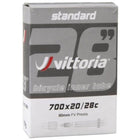
Tubes are sold in ranges, such as 700 x 25–32c or 29 x 2.1–2.4. Read the size on your tyre sidewall (see Tyre sizes decoded) and pick a tube whose range includes it.
Pick the valve type
| Valve | What it looks like | Found on |
|---|---|---|
| Presta | Slim, with a small locknut at the tip | Most road, gravel and modern MTB wheels |
| Schrader | Same as a car valve | Kids' bikes, many hybrids, older MTBs |
| Dunlop (Woods) | Wider base, slim top | Older UK and Dutch-style bikes |
The valve must match the hole in your rim. A Schrader hole is wider than a Presta one, so a Presta tube in a Schrader rim can move about unless you use an adaptor sleeve.
Get the valve length right
The valve must stick out far enough to attach your pump. Choose a valve roughly 15mm longer than your rim depth.
| Rim depth | Valve length |
|---|---|
| Shallow (up to 30mm) | 40–48mm |
| Mid (30–45mm) | 60mm |
| Deep (45mm+) | 80mm or more |
Butyl, latex or TPU?
- Butyl: the standard. Cheap, tough and holds air well.
- Latex: supple and fast, but loses air quickly and needs topping up before every ride.
- TPU: very light and packs small. Needs TPU-specific patches. Check that the tube is approved for use with rim brakes if you have them.
FAQs
Should I carry a spare tube even if I run tubeless?
Yes, it's the quickest fix if the tyre won't seal.
Why do I keep getting pinch flats?
Your pressure is probably too low for your weight and tyre.
Can I patch a tube?
Yes. Patch kits are cheap, and a patched tube makes a good spare.